Guides
Red Flags in Texting: 14 Patterns to Take Seriously (+ Green Flags)
Red flags in texting are repeating patterns (love bombing that flips to withdrawal, guilt-trips over reply times, big plans that never materialize), not one bad day. One flag is a mood; a pattern is a message.
A note before the list: nobody texts perfectly, and a checklist isn't a courtroom. The point isn't to prosecute a busy week: it's to notice when the same uncomfortable thing keeps happening and stop explaining it away. Frequency and repetition are what turn a moment into a flag.
The 14 red flags
- Love bombing, then withdrawal. Overwhelming intensity in week one, constant messages, "I've never felt like this," followed by a sharp pullback once you're invested. The whiplash isn't an accident; the cycle usually repeats, and each round resets your tolerance a little lower.
- Hot-and-cold on a loop. Engaged for three days, gone for four, back like nothing happened. Once is life. As a rhythm, it keeps you permanently auditioning, which is exactly what it's good at. (The full anatomy of this one lives in mixed signals over text.)
- Guilt-tripping your reply time. "Wow, three hours, glad to see where I rank." You're allowed to have a job, a gym, a life. A person who treats your normal response time as an offense is negotiating for control, not closeness.
- They never ask a single question. Scroll back a week and count their question marks. If the answer is zero, the conversation has one subject, and it isn't you. Sustained incuriosity is one of the most underrated flags there is.
- Future-faking. The trip you'll take, the restaurant you'll try, the concert "we have to" see: all vivid, none scheduled. Future-faking buys today's warmth with promises that cost nothing. Watch the conversion rate of promises into calendar entries.
- Control checks. "Who are you with?" "Why were you online but not answering me?" Framed as caring, functioning as surveillance. Questions about your day are interest; audits of your whereabouts are something else.
- Strictly nocturnal. Silence all day, warmth after midnight. Reliably. A person who only remembers you exist after dark has told you which slot you occupy.
- Plans that stay vague on purpose. "Sometime soon" and "we should" doing months of load-bearing work. Vagueness preserves their options while consuming your patience.
- Their schedule is the only schedule. They reply when convenient and expect you instantly; your slow day is a crime, theirs is "busy." A double standard on availability is a small injustice that scales.
- Jokes that are digs. Little put-downs about your looks, your job, your enthusiasm: always with a "lol" attached, always your fault for taking it wrong. If the punchline is reliably you, it's not banter, it's testing what you'll absorb.
- The silent-treatment punishment. You disagree, they disappear. Distance used as discipline trains you to avoid conflict rather than resolve it, and it works, which is why it's a flag.
- You're a secret. Months in: no mention of you to friends, discomfort with anything that makes it visible or real. Someone can be private without making you invisible.
- Instant intensity. Escalating to heavy emotional or sexual territory before knowing your last name's spelling. Speed skips the part where they learn who you are, which can be the point.
- "I never said that." The chat log says otherwise, and you find yourself scrolling up to verify your own memory. Repeatedly rewriting the record, denying messages, twisting what was said, is the flag to take most seriously on this list.
Green flags in texting
Red flags get the attention, but the opposite pattern is just as legible, quieter, less screenshot-worthy, and far better company:
- Consistency. The same person on Tuesday as on Saturday, week after week. Steadiness is the master green flag; most of the others are downstream of it.
- Questions with follow-ups. They ask, you answer, and they ask about the answer. Curiosity that compounds.
- Plans with dates attached. "Thursday, 7?", and Thursday actually happens. Follow-through is the entire difference between interest and entertainment.
- Effort symmetry. Message length and energy roughly match yours without anyone keeping score.
- Repairs after silence. "Sorry I went quiet, brutal week. How did the thing go?" Gaps happen to everyone; acknowledgment is a choice.
- Respect for your pace. Your three-hour reply is met with a normal response, not a sentencing hearing.
- Daylight existence. You get the 9 a.m. version of them, not just the 11 p.m. one.
If you're tallying green flags and wondering whether they add up to actual interest, that's a different question with its own checklist: how to tell if someone likes you over text.
One flag versus a pattern
Everyone on earth has committed at least three items on the red list during finals week. That's why the unit of analysis is never the incident: it's the trend. Ask three questions: Does it repeat? Does it escalate? And does pointing it out produce repair or punishment? A person who guilt-tripped you once and apologized is a person; a person who guilt-trips you weekly and calls your objection dramatic is a pattern. And the usual disclaimer, honestly meant: this is perspective on a conversation, not therapy or a diagnosis of anyone. Some patterns deserve a conversation with a professional, not an app.
How Undertone reads this for you
The trouble with spotting flags in your own chat is that you're standing inside it: habituation is the whole mechanism. An AI chat analyzer reads the thread cold, which is precisely the promise on Undertone's own how-it-works screen: pick a source, add the conversation, get the brutal read.
- Import the chat: a WhatsApp export (richest data) or paste the conversation from Instagram, Snapchat, Tinder, Bumble, Hinge, iMessage, or Messenger.
- Answer the 3-question quiz: who you are, who they are, what this is, so the flags are read in context.
- Approve the privacy consent: it names the AI provider, shows exactly what's sent, and our service never stores the chat.
- Get the read: red flags and green flags decoded with an explanation for each, a compatibility percentage, interest level for both sides, and the relationship dynamics (who initiates, reply rhythms, effort balance) that the flags grow out of.
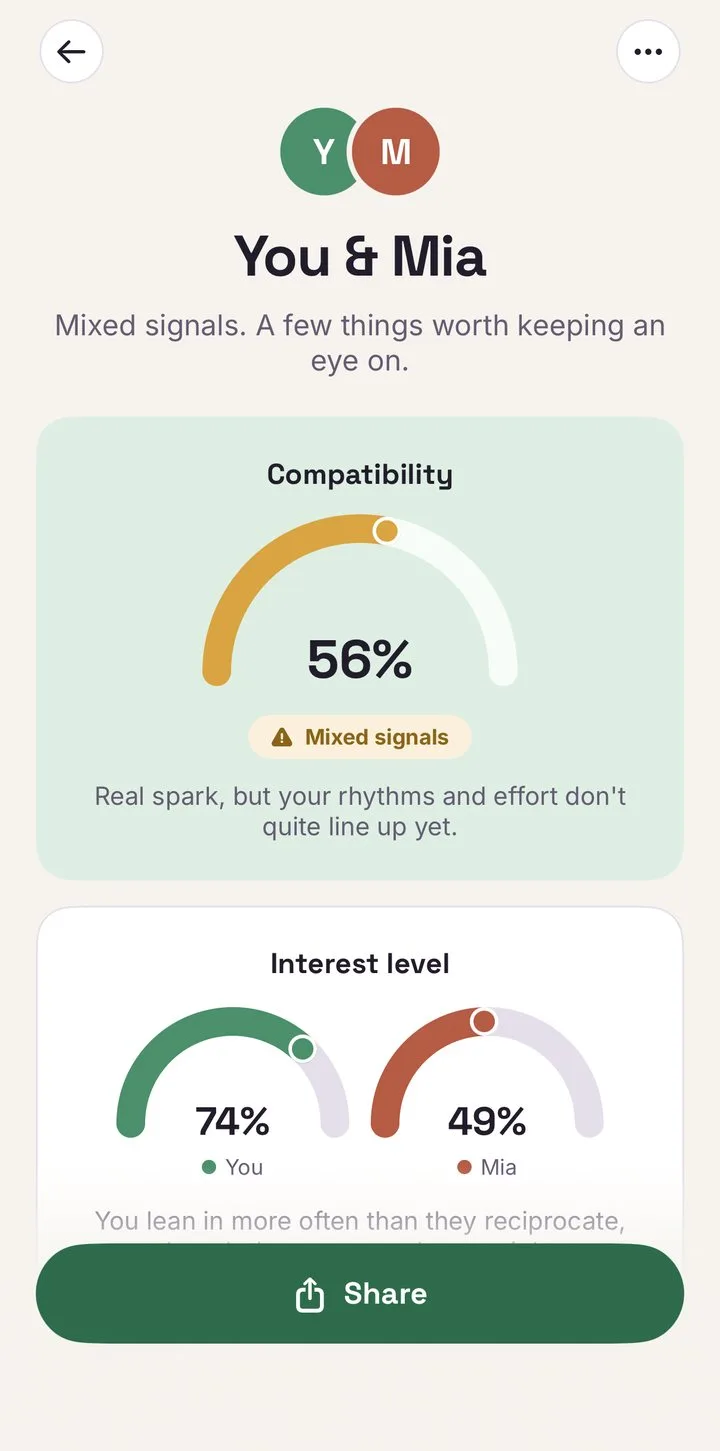
Every flag comes decoded: not just "hot-and-cold detected" but what the pattern looks like in your specific conversation, so you can weigh it instead of just worrying about it.
FAQ
What are the biggest red flags in texting?
The ones that repeat: love bombing that flips into withdrawal, guilt-tripping over your reply times, hot-and-cold cycles, future-faking (big plans that never materialize), control checks like constant "who are you with", and conversations where they never ask a single question about you. One incident is a mood; a repeating pattern is a message.
Is slow texting a red flag?
On its own, no. Plenty of caring people are slow texters, and pace is a style, not a verdict. It becomes a flag when it's selective or weaponized: fast for everyone but you, sudden slowness as punishment after a disagreement, or a double standard where your slow replies get policed and theirs don't.
What are green flags in texting?
Consistency across weeks, questions with follow-ups, plans with actual dates attached, effort that matches yours, repairs after silences ("sorry I disappeared, rough week"), respect for your pace, and being the same person at 9 a.m. as at 11 p.m. Green flags are quieter than red ones: steadiness rarely screenshots well.
Stop rereading the chat.
Undertone launches soon on the App Store: $29.99/year or $4.99/week, no free trial.
Get early access